
White Paper:
Integrating Hydrogen Sensors into Functional Safety Systems
Learn why most sensors fail the integration test and how to integrate with confidence.
When integrating a hydrogen sensor into a functional safety systems, OEMs wonder: can it be trusted to trigger the response? Accuracy is critical. A sensor that reacts to electrolyte vapors or carbon monoxide can cause false alarms. Some OEMs even keep hydrogen sensing on alert-only, putting a person between detection and response, when delay is most dangerous.
Our new white paper lays out what a hydrogen sensor needs to earn a place in the safety chain: component-level fault monitoring, selectivity validated against lithium-ion battery off-gassing, continuous self-calibration, and response times matched to thermal runaway. It ends with six questions to put to any supplier.
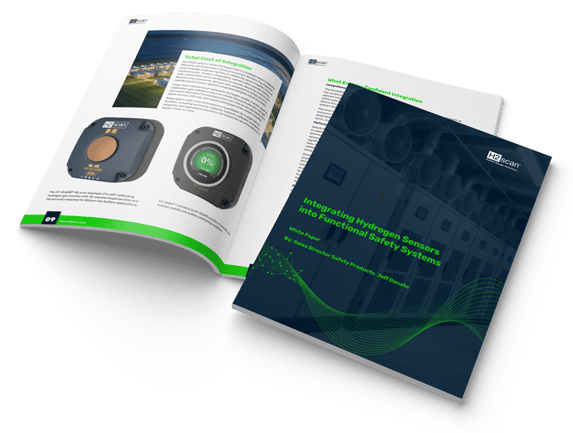
Read White Paper
About H2scan
The future of energy depends on knowing what’s happening before it becomes a problem.
H2scan provides advanced hydrogen technology solutions that deliver early visibility into developing issues by helping operators make informed decisions, improve efficiency, prevent failures, reduce costly disruptions and drive proactive risk mitigation.
H2scan is more than a technology provider. We are a trusted partner helping operators stay three steps ahead of failure - protecting personnel, strengthening infrastructure and supporting a safer/more reliable energy future.
Founded in Valencia, California in 2002, with technology rooted in U.S. Sandia National Laboratories, H2scan has earned the trust of utilities and global manufacturers across critical infrastructure worldwide, as they face greater demands for safety, reliability and uptime.
Learn more at www.h2scan.com.
